What to Plant Right Now for a Fall Harvest
If you're looking at your garden and thinking, "Well, I guess the planting season is over," I have good news.
You're wrong.
One of the biggest surprises for new gardeners is discovering that June and July aren't the end of the gardening season—they're halftime.
While the tomatoes are just getting started and the zucchini are preparing their annual campaign to take over the neighborhood, there is still plenty of time to plant crops that will keep your garden productive right through fall.
In fact, some vegetables actually perform better when planted for a fall harvest than they do in spring.
So before you put those seed packets away, let's talk about what you can still plant right now.
Carrots
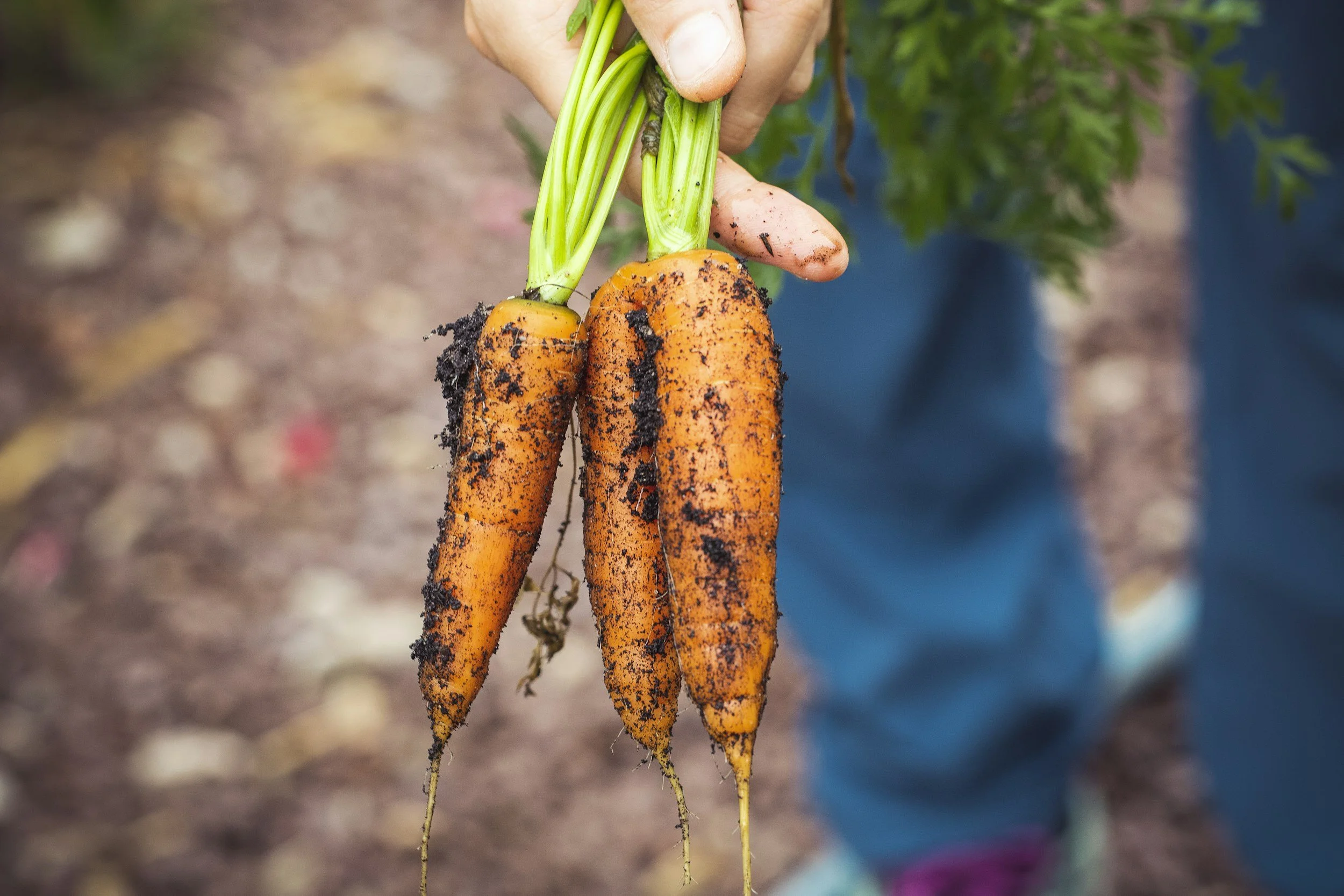
Fall carrots are one of my favorite garden treats.
The warm soil helps seeds germinate quickly, while the cooler temperatures later in the season produce sweet, crisp roots.
My top carrot picks!
Danvers (Best for Beginner Gardeners)
If you're new to growing carrots, Danvers is the one I'd recommend every time. It's forgiving, reliable, and handles heavier or less-than-perfect soil better than many other varieties. The roots are sweet, sturdy, and less likely to end up looking like they belong in a modern art exhibit. If you've struggled with carrots before, Danvers gives you the best chance of success.
Scarlet Nantes (Best Overall)
Scarlet Nantes is my all-around favorite for a fall harvest. It produces beautifully uniform, crisp, sweet carrots with excellent flavor, and cool autumn weather only makes them sweeter. If your soil is reasonably loose, you'll be rewarded with classic, picture-perfect carrots that taste far better than anything you'll find at the grocery store.
If you have the space, I'd suggest planting both. Danvers gives you dependable results, while Scarlet Nantes delivers outstanding flavor and those beautiful straight roots every gardener loves to pull from the soil in the fall.
Beets
Beets are one of the most reliable second-season crops.
They don't ask for much, they're productive, and both the roots and greens are edible.
If you're planting succession crops throughout the season, keeping your seeds organized in a photo box makes life surprisingly easier. Ask me how many times I've purchased seeds I already owned.
Actually, don't.
My top beet picks:
Detroit Dark Red (Best for Beginner Gardeners)
If you're just getting started with beets, Detroit Dark Red is hard to beat. It's dependable, easy to grow, and produces consistently sweet, tender roots. It tolerates a range of growing conditions and is one of those varieties that simply gets the job done. If you're only planting one beet this season, this is the one I'd put in the ground.
Golden (Best for Something Different)
If you've only ever grown red beets, Golden is a fun one to try. It has a milder, sweeter flavor than traditional red beets, and it won't stain your cutting board, hands, or favorite shirt. The bright golden roots look beautiful roasted or sliced into salads, making them a great choice if you like growing vegetables that are as pretty on the plate as they are in the garden.
If you have room for both, plant them together. You'll have the reliability of Detroit Dark Red and the unique color and mild flavor of Golden, giving you a harvest that's both productive and a little more interesting.
Find it here:
Photo Box (but I use it as a seed storage box!): https://amzn.to/4uVEu0I
Bush Beans
Bush beans are perfect for filling empty spaces left behind by harvested lettuce, garlic, or early potatoes.
Many varieties mature in under two months, which means you still have plenty of time for a respectable harvest.
They're also one of those crops that make you feel like a gardening genius because they're generally eager to grow.
My top bush bean picks:
Provider (Best for Beginner Gardeners)
If you're new to growing beans, Provider lives up to its name. It's reliable, productive, and one of the quickest varieties to mature, making it an excellent choice for a fall harvest. It germinates well even when the soil is warm, and before long you'll be picking plenty of tender, flavorful green beans.
Dragon Tongue (Best for Something Different)
Dragon Tongue is one of those beans that gets people talking. The creamy yellow pods are streaked with bold purple stripes, making them as beautiful in the garden as they are in the harvest basket. They're crisp, tender, and delicious fresh or cooked. The purple markings fade when cooked, but they're stunning while they're growing and freshly picked.
I'd plant both without hesitation. Provider gives you a dependable, heavy harvest, while Dragon Tongue adds a little personality to the garden—and that's never a bad thing.
Lettuce
Spring lettuce often reaches a point where it decides it would rather become a flower than remain a salad.
A fresh planting now can provide harvests as temperatures cool later in the season.
If you're battling summer heat, a little shade cloth can make a huge difference and help extend your lettuce season considerably.
My top lettuce picks:
Black Seeded Simpson (Best for Beginner Gardeners)
If you're new to growing lettuce, Black Seeded Simpson is about as easy as it gets. It germinates quickly, grows fast, and is wonderfully forgiving. You can harvest the outer leaves as you need them or let it mature into a full head. It's productive, dependable, and a great confidence-builder for new gardeners.
Little Gem (Best Overall)
Little Gem is one of my favorite lettuces to grow for fall. It forms compact, crisp heads with a sweet flavor that's somewhere between romaine and butterhead. Cool autumn temperatures make it even sweeter, and because it's smaller than a full-sized romaine, it's perfect for smaller gardens and raised beds.
If you've got room for both, plant them together. Black Seeded Simpson gives you quick, continuous harvests, while Little Gem rewards you with crisp, sweet little heads that are hard to beat straight from the garden.
Find it here:
Shade Cloth: https://amzn.to/4uWCjdq
Spinach
Spinach tends to sulk during the hottest parts of summer.
Planting for fall is often far more successful.
Cooler weather produces sweeter leaves, and you'll spend less time wondering why your spinach has decided to bolt for absolutely no reason.
My top spinach picks:
Bloomsdale (Best for Beginner Gardeners)
If you're new to growing spinach, Bloomsdale is the classic choice. It's dependable, easy to grow, and cool fall weather brings out its best. The dark green, crinkled leaves are packed with flavor and hold up beautifully whether you're tossing them into a salad, sautéing them, or adding them to soups. It's been a gardener's favorite for generations for good reason.
Giant Nobel (Best Overall)
If your goal is a big, productive harvest, Giant Nobel is hard to beat. It produces large, smooth, tender leaves that are perfect for fresh eating or cooking, and it really thrives as temperatures cool down. A July sowing sets you up for an abundant harvest once autumn arrives.
Radishes
Need a quick win?
Plant radishes.
Some varieties are ready in less than a month, making them perfect for impatient gardeners who need proof that something is actually happening out there.
Which, let's be honest, is most of us.
My top radish picks:
French Breakfast (Best for Beginner Gardeners)
If you're new to growing radishes, French Breakfast is a fantastic place to start. It's quick to mature, easy to grow, and produces crisp, mildly peppery roots that are far less likely to become woody than many other varieties when harvested on time. They're perfect for snacking, salads, or sliced onto a sandwich. Few vegetables deliver such a quick reward for so little effort.
Japanese Minowase Daikon (Best for a Fall Harvest)
When it comes to fall gardening, it's hard to beat Japanese Minowase Daikon. Unlike spring radishes, this variety actually shines when planted in midsummer for cooler fall weather. It produces long, impressive white roots with a mild, slightly sweet flavor that becomes even better after a light frost. It's excellent fresh, roasted, pickled, or added to soups, and it stores well after harvest.
I'd plant both. French Breakfast gives you a quick harvest while you're waiting for the rest of the fall garden to mature, and Japanese Minowase Daikon rewards your patience with large, flavorful roots that are made for autumn gardening.
Kale
Kale shines in cooler weather.
A light frost actually improves the flavor, making the leaves sweeter and more tender.
Plant it now and you could be harvesting long after your tomatoes have called it quits.
My top kale picks:
Dwarf Blue Curled Scotch (Best for Beginner Gardeners)
If you're just getting started with kale, Dwarf Blue Curled Scotch is the one I'd recommend. It's hardy, dependable, and incredibly forgiving. The tightly curled blue-green leaves stand up well to cooler weather, and they become noticeably sweeter after a light frost. It's a productive variety that keeps giving well into the fall.
Lacinato (Best Overall)
Also known as dinosaur kale, Lacinato is my pick if you're after exceptional flavor and versatility. Its dark, deeply textured leaves are tender enough for salads when young and outstanding in soups, sautés, and pasta dishes as they mature. Fall weather only improves the flavor, making it one of those crops you'll be happy you made room for.
If you can grow both, do it. Dwarf Blue Curled Scotch offers dependable harvests with very little fuss, while Lacinato brings outstanding flavor and a touch of elegance to the fall garden. They're a combination that's hard to beat.
Don't Forget the Flowers
Fall harvest planning isn't just about vegetables.
If you have open spaces, consider planting nasturtiums, calendula, zinnias, or cosmos.
Not only will they keep your garden looking beautiful, but they'll continue feeding pollinators well into the season.
And if you've never tossed a few nasturtium flowers into a summer salad, you're missing out. They're edible, peppery, and so pretty they make every meal look intentional.
A Few Things That Make Fall Planting Easier
By midsummer, your garden has likely developed its own personality. Some plants are thriving, some are questionable, and a few have already become compost.
A few simple tools can make succession planting easier:
Garden markers so you remember what you planted where.
A watering wand to keep newly seeded areas consistently moist.
Raised beds if you're expanding into new growing space.
Seed organizers to keep next month's planting plans from becoming a scavenger hunt.
None of these are required, of course.
Gardeners have been growing food for centuries without fancy gadgets.
But a little convenience never hurt anyone.
Find it here:
Garden markers: https://amzn.to/4g1Uqef
Watering Wand: https://amzn.to/4b8jInu
Raised beds: wood: https://amzn.to/4xOaBCl metal: https://amzn.to/4gGxK3m
Seed organizer: https://amzn.to/4uVEu0I
The Season Is Far From Over
One of the best things about gardening is realizing there are always second chances.
A failed crop can be replaced.
An empty space can be replanted.
A disappointing spring can still turn into a fantastic fall harvest.
So before you declare the gardening season finished, grab a few seed packets and head back outside.
Future-you—standing in the garden on a cool September morning, harvesting fresh carrots and kale—will be very glad you did.
Just a little heads up, garden friends 🌿 — if you purchase through one of my links, I may earn a small commission at no extra cost to you… which mostly goes toward funding my entirely reasonable plant addiction. 💚
My Amazon Storefront is open!
Check out my Top 20 Picks here!