Winter Is Coming: Your Garden Isn’t Ready, But You Can Be
There comes a moment every September when I look around my garden and think:
“This is wonderful. I would like it to continue forever, please.”
Unfortunately, I do not control the seasons.
Sooner or later, the tomatoes will give up, the basil will become a distant memory, the flowers will collapse dramatically onto the ground, and the first frost will arrive like an uninvited guest who has somehow heard there is wine in the house.
But here’s the good news: the end of outdoor gardening does not have to mean the end of gardening.
It just means we move the operation indoors.
And if you start planning now—while your garden is still producing instead of waiting until November while standing in the garden centre wearing a winter coat—you can set yourself up for a surprisingly productive indoor growing season.
Start Thinking Like a Gardener Who Has a Basement
Indoor gardening is a little different from outdoor gardening.
Outside, you have the sun, rain, wind, soil organisms, pollinators and approximately 47,000 other creatures who have opinions about what you planted.
Inside, you have…you.
And possibly a cat.
The first thing to decide is what you actually want to grow.
If your goal is to harvest fresh food all winter, some of the easiest choices include:
Lettuce and salad greens
Microgreens
Basil
Cilantro
Parsley
Chives
Mint
Baby kale
Arugula
Pea shoots
And if you’re feeling a little more ambitious, you might even consider compact varieties of tomatos or peppers. I’d recommend starting with the easier stuff first but it’s up to you how far you’d like to push the limit!
You don't need to recreate the entire garden in your living room. Unless, of course, you want to. I am not here to judge.
The Indoor Garden Starter Pack
There are a few things that make indoor gardening considerably easier.
1. Grow Lights (Or Their Less Expensive Cousin)
Let's talk about the elephant in the room—or, more accurately, the lack of 10 hours of January sunshine.
Your plants are going to need light.
A bright south-facing window can help, but during the winter, natural light often isn't enough for healthy, vigorous growth. That's where supplemental lighting comes in.
And here's a little secret: you don't necessarily need an expensive grow light.
If you're growing seedlings, herbs or leafy greens, LED shop lights can be a much less expensive alternative to dedicated grow lights. Look for LED shop lights with a colour temperature around 5,000–6,500K (often described as "daylight"). Hang them close enough to the plants and keep them on for an appropriate amount of time each day.
Are fancy grow lights great? Absolutely.
Do your plants care whether the light came from a $30 shop light or a $150 grow-light system?
Not nearly as much as your wallet does.
Shop lights can be particularly useful if you're setting up a simple shelf-growing system in a basement, laundry room or spare room. They're also a great way to experiment with indoor gardening without investing a fortune.
And this is a perfect time to buy one.
Not in January.
January You is cold, cranky and desperately trying to find a grow light online at 10:47 p.m.
August You has considerably more foresight.
2. Seed-Starting Trays
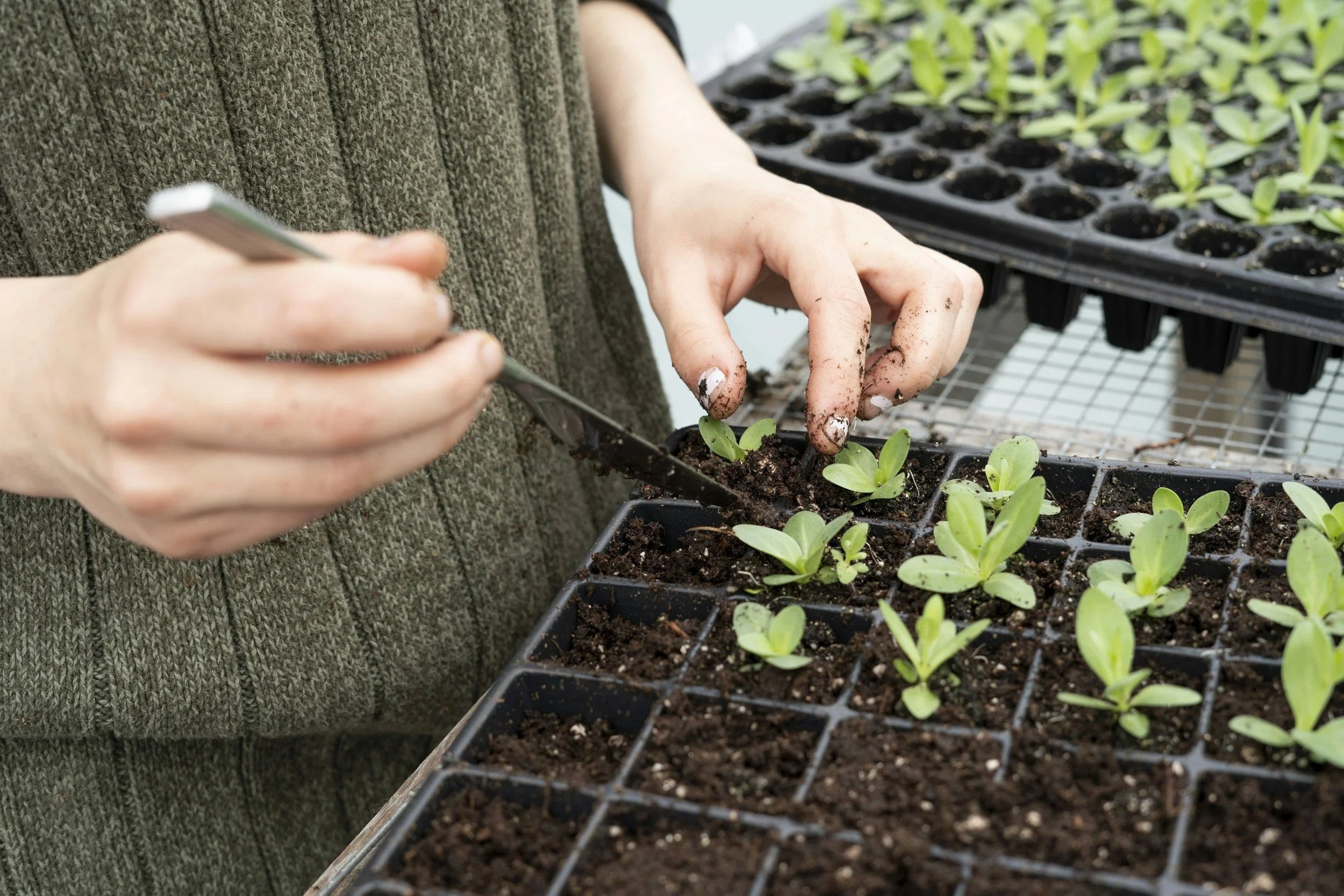
If you've never grown microgreens or started herbs indoors, seed trays are a wonderfully simple way to begin.
They're inexpensive, reusable and take up very little space.
You can also use small pots, recycled containers or pretty much anything that holds soil and has drainage holes.
Because remember:
A container without drainage is just a tiny swamp.
Your plants will not thank you for the swamp.
3. Quality Potting Mix
Please don't go outside, dig up some garden soil and bring it into the house.
I know.
I know.
It feels logical.
But outdoor soil can be heavy, compact easily in containers and may bring along fungus gnats, weed seeds and other tiny freeloaders who will happily move into your house and refuse to leave.
Use a good-quality indoor potting mix instead.
Your houseplants—and your sanity—will thank you.
4. A Small Fan
This is one of those things that sounds slightly ridiculous until you try it.
A small fan gently moving air around your seedlings can help improve air circulation and reduce the damp, stagnant conditions that can encourage fungal problems.
You don't need to recreate a hurricane.
We're growing lettuce, not training for a windsurfing competition.
A small clip-on fan is usually plenty.
5. Labels
You are absolutely going to remember what you planted.
Until you don't.
Then six weeks later you'll be staring at three identical pots thinking:
“Is this cilantro, parsley or something I accidentally planted while distracted?”
Label your containers.
Future You will appreciate it.
Consider a Grow Tent
If you're serious about indoor gardening—or you simply enjoy taking perfectly reasonable hobbies to their logical extreme—a small grow tent is worth considering.
A grow tent gives you a contained environment where you can control light, temperature and humidity much more easily.
It also has the delightful side effect of making you look like you're running a highly sophisticated horticultural laboratory.
Which, frankly, is much more exciting than saying:
“I grow lettuce in my basement.”
You can find grow tents in a variety of sizes, from small countertop setups to much larger systems.
You don't need a giant one.
Start with the space you actually have.
Don't Forget the Herbs
One of my favourite ways to extend the gardening season is to bring herbs indoors.
Basil is an obvious choice, but don't stop there.
Parsley, chives, oregano, thyme, cilantro and mint can all make wonderful additions to an indoor garden.
And there is something deeply satisfying about snipping fresh herbs in January while looking out at a landscape covered in snow.
It's basically gardening's version of revenge.
“Oh, you thought you could stop me, Winter?”
Nope.
I'm making pesto.
Bring Some Plants Inside
Before the first frost, take a walk around your garden and decide whether anything deserves a second life indoors.
Some herbs can be brought inside and grown through the winter.
You can also take cuttings from certain plants and root them indoors, allowing you to create new plants without starting completely from scratch.
Just be careful about bringing outdoor pests inside with them.
Inspect plants carefully.
Look underneath leaves.
Check stems and soil.
And if you see something crawling that you don't remember inviting, quarantine that plant until you figure out what you're dealing with.
Because one aphid is never just one aphid.
They have friends.
Start Your Winter Garden Before Winter Starts
This is the biggest piece of advice I can give you:
Don't wait until October to think about indoor gardening.
Late summer and early fall are actually the perfect time to get organized.
Make a list of what you want to grow.
Figure out where your lights will go.
Clean your pots and trays.
Pick up potting mix.
Get your grow lights.
Find that extension cord you swear you bought last year.
And if you're using a grow tent, assemble it before you're trying to do it in the middle of winter while muttering things about whoever invented those instructions.
The goal isn't to create a perfect indoor farm.
It's to make winter a little more productive, a little greener and a lot less depressing.
Because while the outdoor garden is sleeping, we don't have to.
My Indoor Gardening Shopping List
If you're getting your indoor garden ready, I've put together a few of my favourite supplies to make the transition easier.
[Shop my indoor gardening picks on Amazon →]
Look for:
🌱 LED grow lights (or shop lights) – because winter sunshine is not exactly reliable.
🌱 Seed-starting trays – perfect for herbs, lettuce and microgreens.
🌱 Small pots and containers – because apparently I can never have enough containers.
🌱 Quality indoor potting mix – keep the garden soil outside where it belongs.
🌱 Clip-on fans – gentle air circulation for healthier seedlings.
🌱 Plant labels – because apparently "I'll remember" is not a reliable horticultural system.
🌱 Humidity meters – particularly useful if you're growing in a grow tent or dry winter house.
🌱 Digital timer – because who wants to have to remember to turn on/off those grow lights every 12 hours?!
🌱 A small watering can – preferably one that doesn't dump half the contents onto your windowsill.
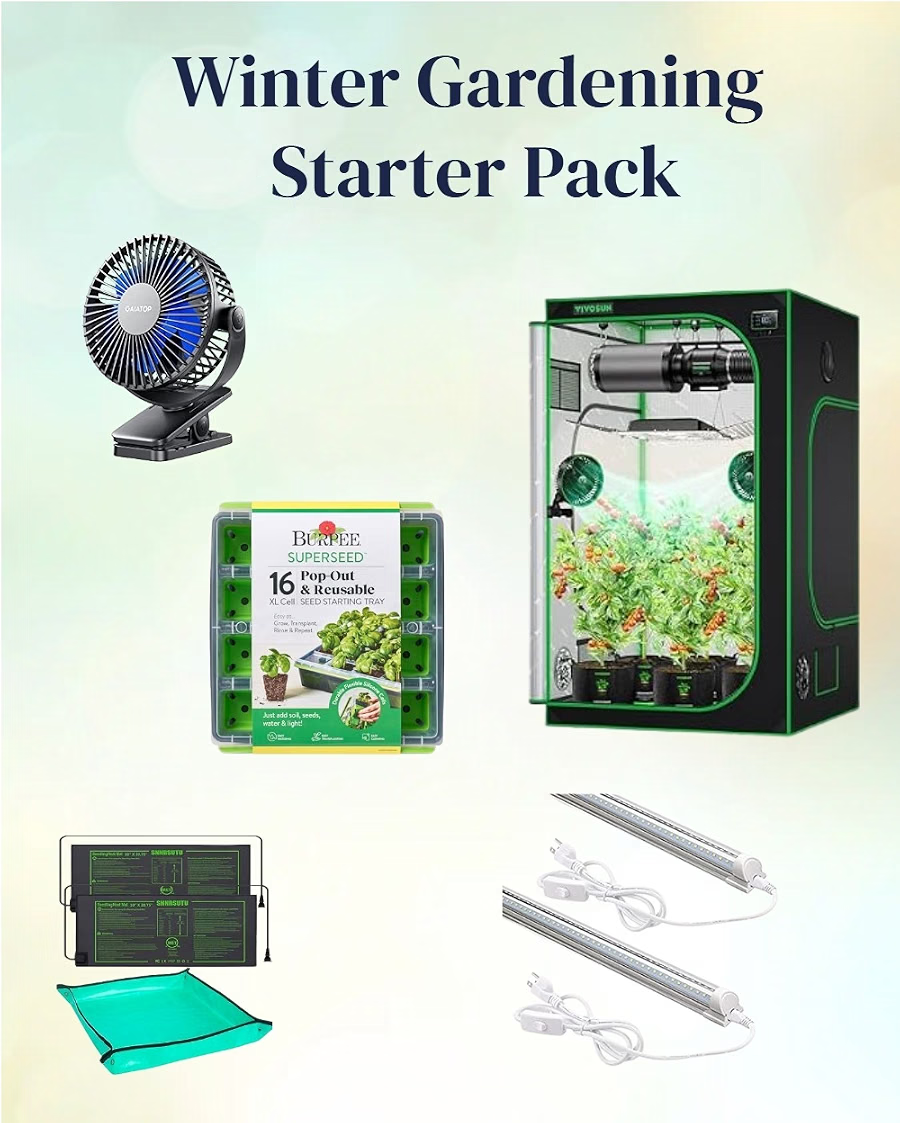
Find it Here: Some of my favourite indoor winter gardening supplies: https://amzn.to/4ycyp2e
And One Last Thing…
There is something wonderful about growing things indoors during winter.
When the garden outside is brown, frozen and completely uninterested in cooperating, you can still have green things growing under a light in your kitchen, office, basement or spare room.
You can harvest fresh herbs.
You can grow salad greens.
You can start seedlings for next year's garden.
And you can stand in your warm house, holding a handful of fresh basil in January, and feel just a tiny bit smug.
Which, let's be honest, is one of gardening's many rewards.
Winter can have the snow.
I'll take the basil.
— Juniper 🌱
This post contains affiliate links. If you purchase something through one of my links, I may earn a small commission at no additional cost to you. I only recommend products I think would be useful for fellow gardeners.